Mastering the Generative AI Pipeline: Why You Should Ignore "Hallucinations" and Manage "AI Panic" Instead
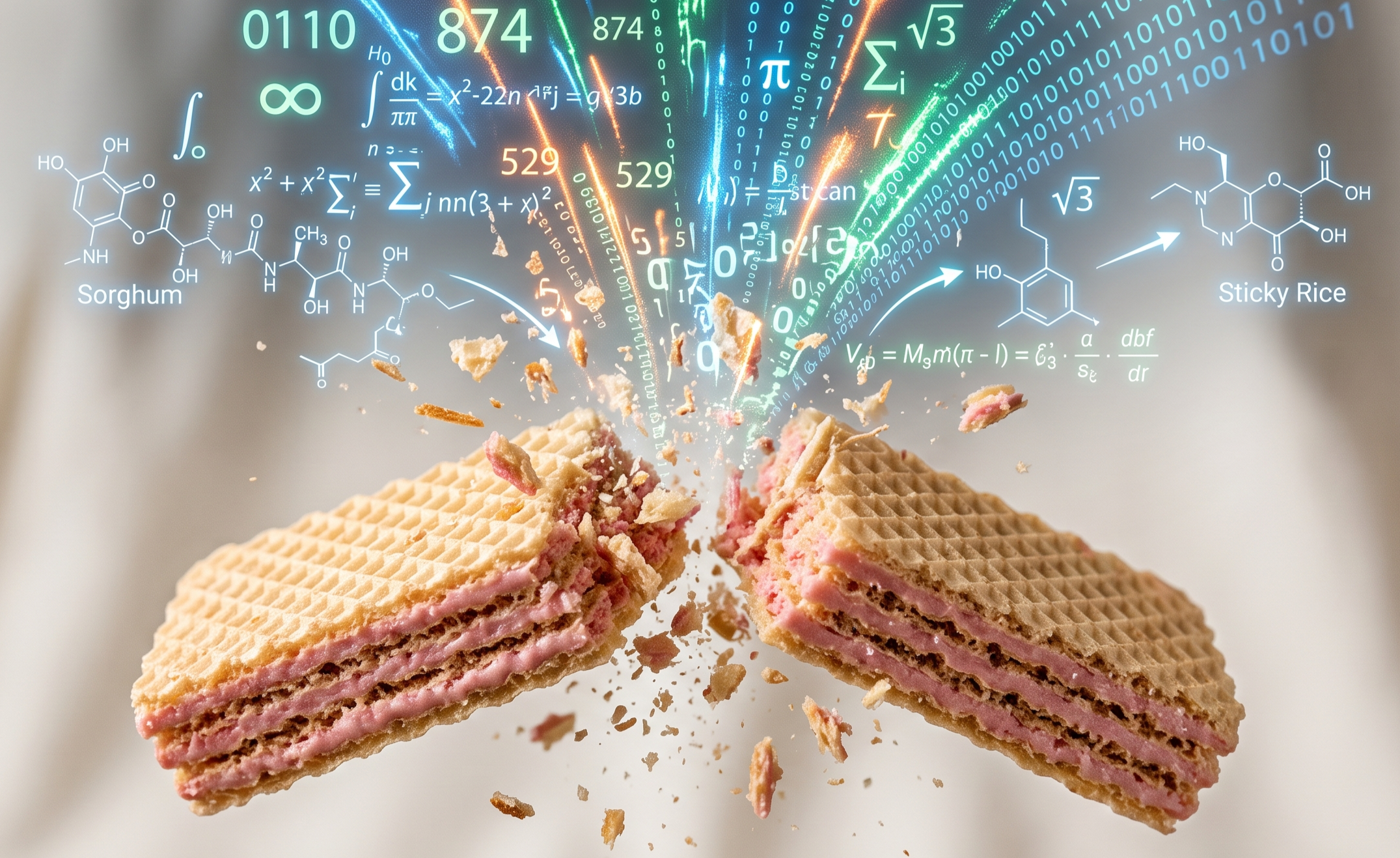
This morning, I was experimenting with a new recipe for gluten-free sorghum wafers in my kitchen. I was using a generative AI to help me break down the complex starch chemistry between glutinous rice flour and coarse sorghum grain.
The AI nailed the chemical theory. But when it came time to actually put the batter into a physical, high-pressure wafer press, the AI's digital logic crashed into real-world mechanics. The model started to over-correct. It lost the plot.
I realized in that moment that I wasn't just fixing a recipe—I was watching the exact friction point that frustrates so many professionals trying to integrate AI into their workflows.
The Myth of "AI Hallucination"
In the creative and marketing worlds right now, everyone talks about "AI Hallucinations"—the moments when an AI confidently makes something up. But in my experience, a lot of what we call hallucinations actually comes down to a user blindly trusting the machine without having any foundational knowledge of their own. If you expect the AI to do 100% of the thinking, you will always be disappointed.
What I experienced this morning was something different. I call it AI Panicking.
What is "AI Panicking"?
AI Panicking happens in the blind spot between the raw data you feed the model and the physical, real-world execution.
When you know exactly what you want, and you use the AI to fill in the technical gaps, there is a moment where the variables don't perfectly align on paper. The AI gets "nervous." It starts generating erratic, hyper-theoretical suggestions that ignore the physical constraints of your project.
If you don't know any better, that panic is contagious. You abandon your plan. But if you know your craft, you can calmly conquer the AI's panic phase. You apply the brakes, use your own experience to rule out what won't work, and guide the model back to your original vision.
The Return of the 10,000-Hour Rule
This is where human intuition becomes the most valuable asset in the generative AI era.
In his landmark book Outliers, author Malcolm Gladwell popularized the "10,000-Hour Rule" (based on the research of psychologist K. Anders Ericsson). The rule suggests that it takes roughly 10,000 hours of deliberate, dedicated practice to achieve true mastery in any field.
For a while, people thought generative AI would erase the need for those 10,000 hours. The reality is the exact opposite.
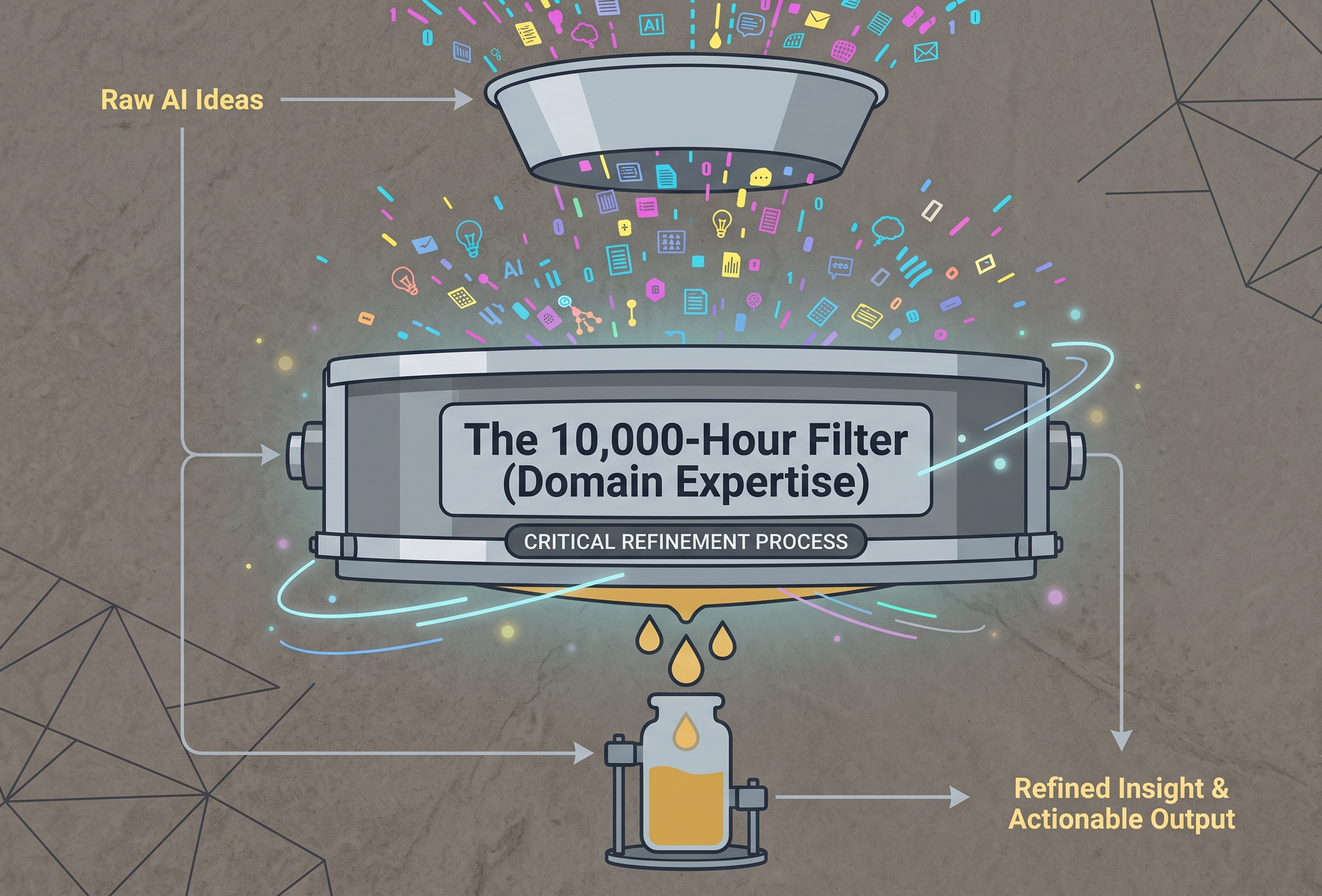
Whether it is 40 years of tactile intuition in the kitchen, or 17 years spent managing complex camera and layout pipelines for feature films, that hard-earned muscle memory is your ultimate filter. You need the 10,000 hours so that when the AI panics, you don't.
"AI will not replace humans, but humans who use AI will replace those who don't."
— Karim Lakhani, Harvard Business School
The Modern Creative Pipeline
After months of testing Midjourney, ChatGPT, DeepSeek, and Gemini, I’ve realized that the ultimate human-AI workflow isn't about replacing the human mind; it’s about what the tech industry calls the "Human-in-the-Loop" model.
Here is my personal pipeline for executing successful projects with AI:
The Human Anchor: Start with a concrete, initial idea based on your own real-world experience.
The AI Expansion: Use AI to collect raw data, analyze compound information, and explore variations rapidly.
The Filter: Double-check the AI's suggestions. Use your domain expertise to spot the "AI Panic" and cut out the theoretical fluff that won't work in reality.
The Execution: Test, iterate, and use the AI to refine the final adjustments.
When you manage the panic and steer the ship, you eventually come up with a final product—whether it's a perfect pastry, a marketing campaign, or a 3D visual layout—that simply would not have been possible without the synergy of both.
The AI is just the engine. Your 10,000 hours are the steering wheel.